Introduction
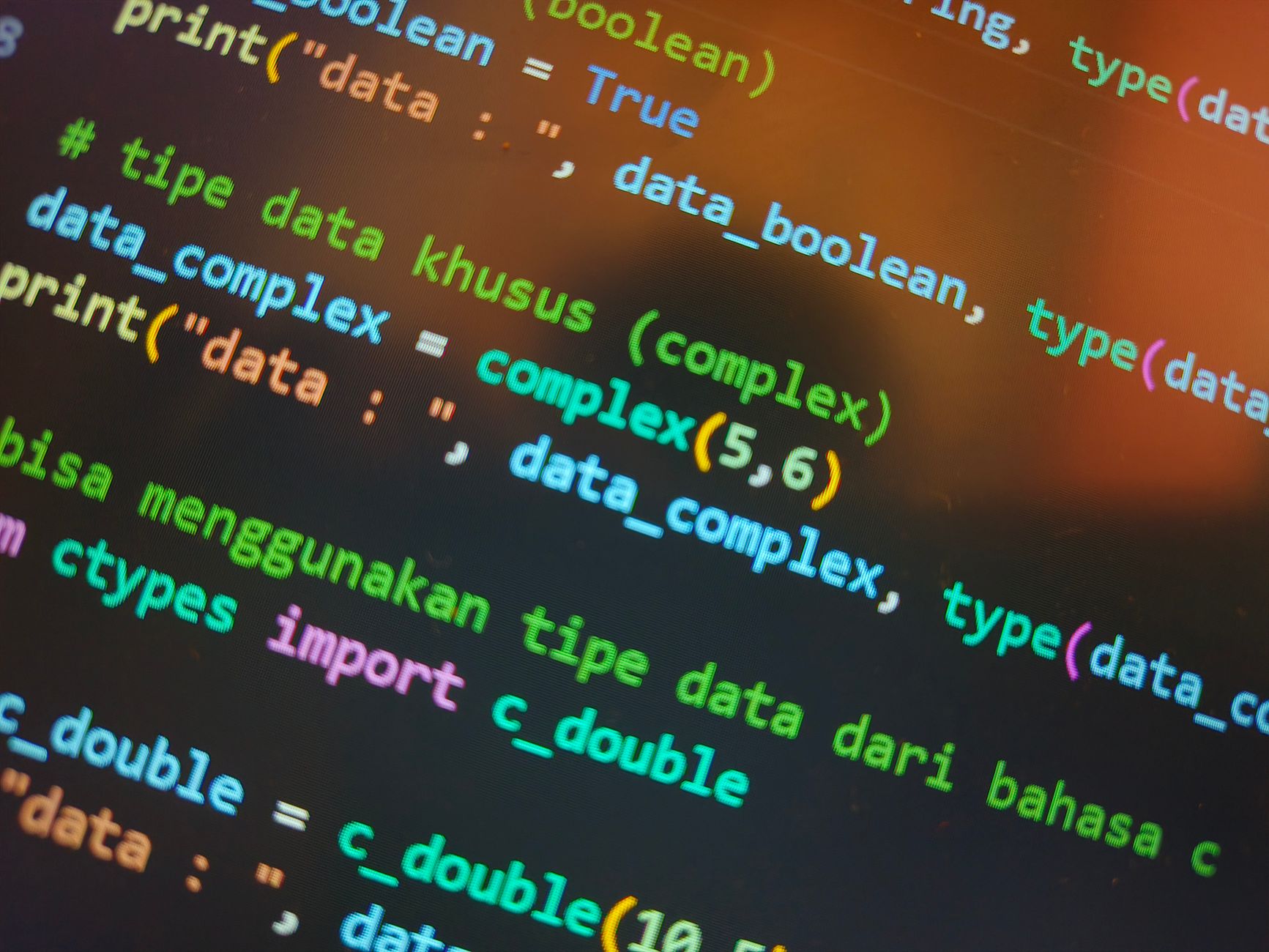
Understanding Python data types is fundamental to mastering the language and leveraging its full potential. Python, a versatile and widely-used programming language, offers a variety of built-in data types that cater to different needs and use cases. These data types include lists, tuples, sets, and dictionaries, each with its unique characteristics and applications.
Lists in Python are ordered and mutable, making them ideal for scenarios where you need to store and manipulate a sequence of items. Tuples, on the other hand, are ordered but immutable, providing a way to store data that should not be changed. Sets are unordered collections that do not allow duplicate elements, which is useful for membership testing and eliminating duplicates. Dictionaries store key-value pairs, offering a flexible way to organize and access data efficiently.
In this guide, we will explore Python data types in depth, providing you with the knowledge and skills to use them effectively in your projects. By the end of this article, you will have a solid understanding of how to work with these data types, enabling you to write more efficient and readable Python code.
Prerequisites
Before diving into Python data types, it is essential to have a basic understanding of Python syntax and programming concepts. Familiarity with variables, loops, and functions will be beneficial as we explore how these data types can be utilized in various scenarios. Additionally, having Python installed on your system is necessary to follow along with the examples and exercises provided in this guide.
If you are new to Python, consider reviewing introductory materials or tutorials to get up to speed with the language. This foundational knowledge will help you grasp the concepts discussed in this article more effectively. For those who are already comfortable with Python, this guide will serve as a comprehensive resource to deepen your understanding of its data types.
Understanding Python Data Types
Python data types are the building blocks of any Python program. They define the kind of data that can be stored and manipulated within the program. Each data type in Python has its own set of properties and methods, allowing developers to perform specific operations efficiently.
Lists are one of the most commonly used Python data types. They are ordered collections of items that can be changed or updated. This mutability makes lists versatile for a wide range of applications, from simple data storage to complex data manipulation tasks. Lists are defined using square brackets, and items within a list can be of different data types.
Tuples, in contrast, are similar to lists but are immutable. Once a tuple is created, its elements cannot be modified. This immutability makes tuples suitable for storing data that should remain constant throughout the program. Tuples are defined using parentheses, and like lists, they can contain elements of different data types.
Sets are another important Python data type. They are unordered collections of unique elements, meaning that no duplicates are allowed. Sets are particularly useful for membership testing and eliminating duplicate entries from a list. They are defined using curly braces, and their unordered nature means that elements cannot be accessed by index.
Dictionaries are a powerful data type in Python that store data in key-value pairs. This structure allows for efficient data retrieval based on unique keys. Dictionaries are defined using curly braces, with each key-value pair separated by a colon. They are highly flexible and can be used to represent complex data structures.
Step-by-Step: Python Data Types Guide
1. Working with Lists
To create a list in Python, use square brackets and separate items with commas. For example:
my_list = [1, 2, 3, 4, 5]Lists are mutable, so you can add, remove, or change items. Use the append() method to add an item:
my_list.append(6)To remove an item, use the remove() method:
my_list.remove(3)2. Working with Tuples
Create a tuple using parentheses. For example:
my_tuple = (1, 2, 3)Tuples are immutable, so you cannot change their items. However, you can access elements using indexing:
print(my_tuple[1])3. Working with Sets
Create a set using curly braces. For example:
my_set = {1, 2, 3, 4}Sets do not allow duplicates. To add an item, use the add() method:
my_set.add(5)To remove an item, use the discard() method:
my_set.discard(2)4. Working with Dictionaries
Create a dictionary using curly braces with key-value pairs. For example:
my_dict = {'key1': 'value1', 'key2': 'value2'}Access values by their keys:
print(my_dict['key1'])To add or update a key-value pair, simply assign a value to a key:
my_dict['key3'] = 'value3'5. Converting Between Data Types
Python allows conversion between data types. For example, convert a list to a set to remove duplicates:
my_list = [1, 2, 2, 3]my_set = set(my_list)Convert a tuple to a list to make it mutable:
my_tuple = (1, 2, 3)my_list = list(my_tuple)Verifying Your Setup
After working with Python data types, it’s crucial to verify that your setup is functioning as expected. Run your Python scripts and check the output to ensure that data types are being used correctly. Use print statements to display the contents of lists, tuples, sets, and dictionaries at various stages of your program.
Additionally, take advantage of Python’s built-in functions such as len() to verify the size of your data structures. This can help you confirm that operations like adding or removing elements are working as intended. If you encounter unexpected results, revisit your code to identify any logical errors or incorrect method usage.
Troubleshooting Common Issues
When working with Python data types, you may encounter common issues such as type errors or unexpected behavior. One frequent issue is attempting to modify an immutable data type like a tuple. Remember that tuples cannot be changed after creation, so consider using a list if you need mutability.
Another common issue is encountering a KeyError when accessing dictionary elements. This occurs when you try to access a key that does not exist in the dictionary. To prevent this, use the get() method, which returns None instead of raising an error if the key is not found.
For set operations, ensure that you are aware of the unordered nature of sets. Attempting to access set elements by index will result in an error. Instead, use methods like pop() to remove arbitrary elements or iterate over the set to access its contents.
Best Practices for Python Data Types
To effectively use Python data types, follow best practices that enhance code readability and maintainability. Choose the appropriate data type based on your specific use case. For example, use lists when you need an ordered collection that can be modified, and opt for tuples when you want to ensure data remains unchanged.
When working with dictionaries, use descriptive keys that clearly indicate the data they represent. This will make your code more understandable and easier to maintain. Additionally, take advantage of dictionary methods like items() and keys() to iterate over key-value pairs or keys efficiently.
For sets, leverage their unique property of eliminating duplicates to simplify your code. Use set operations like union and intersection to perform mathematical set operations, which can be more efficient than using lists. Always consider the performance implications of your data type choices, especially when dealing with large datasets.
Conclusion
Mastering Python data types is essential for any developer looking to harness the full power of the language. By understanding the characteristics and use cases of lists, tuples, sets, and dictionaries, you can write more efficient and effective Python code. Each data type offers unique advantages, and choosing the right one for your task can significantly impact the performance and readability of your programs.
As you continue to work with Python, keep exploring and experimenting with its data types to deepen your understanding. Practice using them in different scenarios to become more comfortable with their properties and methods. With time and experience, you will develop the skills needed to tackle complex programming challenges with confidence.
For further reading on Python data types, consider visiting the official Python documentation or exploring more advanced topics on our Linux section. These resources will provide you with additional insights and examples to enhance your Python programming journey.
Comments
Loading comments…
Leave a Comment